

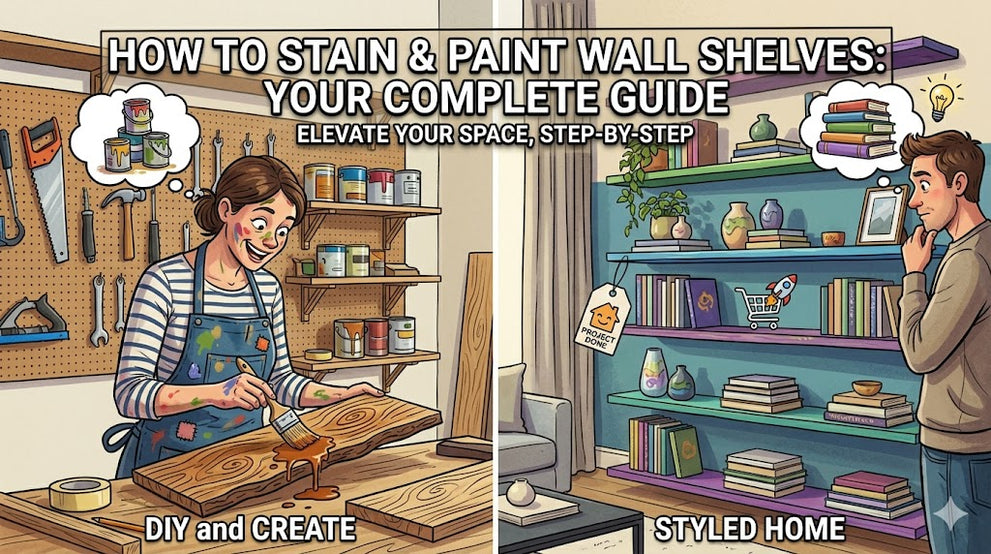
There's a special kind of pride that comes from customizing a piece for your home. Taking a beautiful, raw furniture-grade Baltic birch shelf—like our 45-inch wall shelves or 24-inch wall shelves—and transforming it with your own hands is a simple project with stunning results. Whether you envision a deep espresso stain, a bold mustard yellow, or a classic golden oak, finishing your WoodSnap shelves is an easy and rewarding DIY project.
This guide will walk you through everything you need to know—whether you want to enhance the wood's natural beauty with stain or go for a complete color change with paint. From gathering your supplies to applying that final protective coat, we'll help you achieve a professional-quality finish on your new wall shelves.
Why Bother Staining or Painting Unfinished Wood?
Starting with an unfinished piece like our 45-inch wall shelves offers a world of creative possibilities that pre-finished items can't provide.
-
Complete Creative Freedom: You are in charge of the final look. The color, the sheen, and the finish are all your decision.
-
Perfect Color Matching: Do you need your new shelves to match your existing trim, cabinets, or furniture? You can test and mix stains and paints until you get the exact shade you need.
-
Cost-Effective Customization: Unfinished wood shelves often come at a better price point. A can of stain or spray paint is a small investment for a custom look.
-
Highlighting Quality: We make our shelves with furniture-grade Baltic birch because we know the natural grain is beautiful. Staining enhances that beauty, while painting lets you create a striking effect.
-
Future-Proof Your Style: If your home décor changes, you can simply sand the shelves down and re-stain or repaint them.
Our WoodSnap shelves are designed to be your blank canvas. The furniture-grade Baltic birch provides a durable foundation that accepts both stain and paint wonderfully.
Tools and Materials for Your Project
One of the great things about this project is that you don't need a professional workshop. Here is a simple shopping list to get you started.
Essential Materials for Staining:
-
Wood Stain: Your chosen color (we recommend Minwax Wood Finish).
-
Pre-Stain Wood Conditioner: Highly recommended for an even, professional finish like Minwax Pre-Stain.
-
Protective Topcoat: Polyurethane or Polycrylic to seal your work.
-
Sandpaper: Fine-grit (220) for prep and extra-fine-grit (320) for smoothing between coats.
-
Tack Cloth: Essential for removing every speck of dust before staining.
-
Foam Brushes or Lint-Free Rags: For applying stain and topcoat.
-
Disposable Gloves: Stain can be difficult to wash off your skin.
Essential Materials for Painting:
-
Spray Paint: Choose a high-quality brand like Rust-Oleum Paint in your desired color.
-
Clear Matte Spray Finish: For sealing and protecting the painted surface.
-
Sandpaper: Fine-grit (220–320) for prep and between coats.
-
Drop Cloth or Cardboard: To protect your work surface.
A Step-by-Step Guide to Staining Your Shelves
Step 1: Prepare Your Workspace Find a well-ventilated area, like a garage or a covered patio. Lay down your drop cloth to catch any drips. The ideal temperature for staining is between 50–80°F.
Step 2: Sand the Surface Smooth Using your 220-grit sandpaper, sand gently in the direction of the wood grain. Once done, wipe away every speck of dust with a tack cloth. Any dust left behind will create a gritty, uneven finish.
Step 3: Apply Pre-Stain Wood Conditioner This is your secret weapon against a blotchy finish. For woods like birch, this step is a game-changer. Use a foam brush to apply a thin, even coat and follow the timing on the can.
Step 4: Apply Your Stain Stir your can of stain thoroughly (never shake!). Dip your brush or rag into the stain and apply to the shelf, moving with the grain. Let it sit for 5 to 15 minutes depending on how dark you want the color, then wipe off all excess with a clean rag.
Step 5: Let It Dry and Add More Coats Once the first coat is completely dry, assess the color. If you want it darker, lightly sand with 320-grit, wipe away dust, and apply a second coat.
Step 6: Apply the Protective Topcoat Apply your chosen topcoat (like Minwax Polycrylic) in two or three thin layers. Lightly sand with 320-grit sandpaper between coats for the smoothest possible finish.
Painting Your Shelves: For a Complete Color Change
Step-by-Step Painting Process:
-
Clean Your Piece: Wipe the shelf with a dry cloth or use compressed air to remove dust.
-
Prep with Sanding: Lightly sand surfaces with 220–320 grit for best paint adhesion.
-
Spray Paint First Coat: Shake the can vigorously. Spray an even, light coat 8–12 inches away.
-
Dry and Flip: Let the first side dry completely before flipping.
-
Lightly Sand Between Coats: Once dry, sand very lightly for smoothness and remove dust.
-
Apply Second Coat: Spray another light, even coat for full, rich color.
-
Apply Clear Matte Spray Finish: After the color is fully dry, spray a Clear finish to add protection without changing the sheen.
Common Mistakes to Avoid
-
Skipping the Pre-Stain Conditioner: This is the most common reason for a blotchy result. Don't skip it!
-
Not Sanding Properly: Prep sanding is crucial for smooth results. Always sand with the grain.
-
Applying Too Heavy a Coat: Light, even coats are best. Heavy coats cause drips and sticky spots.
-
Being Impatient: Always let each coat fully dry before re-coating or sealing.
Ready to Start Your Project?
Transform your space with a custom look that you created yourself. Our unfinished Baltic birch shelves are the perfect starting point for any DIY enthusiast.
Shop the Look:
Next Step: Once your shelves are finished and dry, check out our Installation Page to get them safely on your wall!

